
 4 people are currently interested in the event
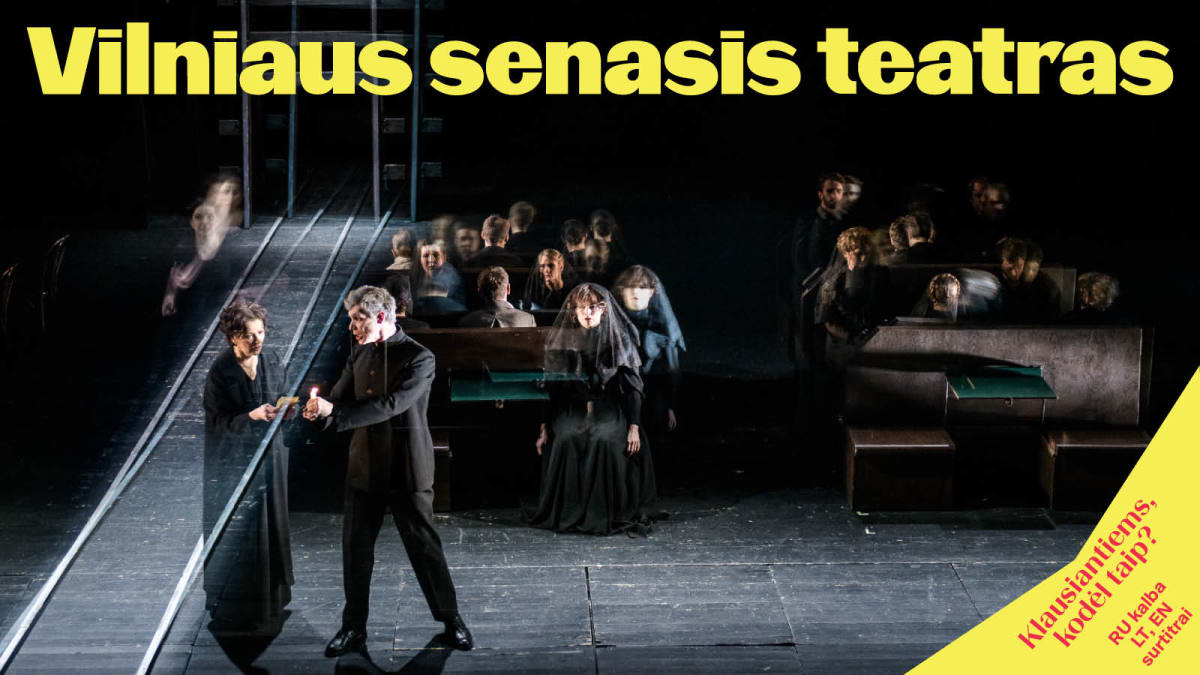
Marius Ivaškevičius „RUSIŠKAS ROMANSAS“ (Rež. Oskaras Koršunovas)
Naujasis Senojo teatro 113-asis sezonas: šokantis, performatyvus, dramatiškas
Event information
Dviejų dalių dramos spektaklis
Playwright Marius Ivaškevičius’s drama explores the turmoil within the family of the great Russian writer Leo Tolstoy in the months leading up to his death. Yet Tolstoy himself never appears – neither in the text nor on stage. Instead, the emotional core of the play is his wife, Sophia Tolstaya, whose love is depicted as passionate, reckless, almost inhuman – capable equally of creation and destruction. In her, the playwright and director find echoes of Tolstoy’s other literary heroines, especially Anna Karenina.
One central character is Chertkov – a real historical figure who became Tolstoy’s close confidant and ‘secret weapon’, a man whose influence turned the author’s last years of family life into a living hell.
The stage becomes a metaphorical railway track, symbolising the relentless advance of history. Here, cultural clichés, illusions, jealousy, and myths surrounding genius and Russian identity are all crushed by the locomotive of history – and of today’s harsh reality.
Director Oskaras Koršunovas calls Russian Romance a multi-layered play brimming with thought-provoking themes: the tension between art and real life, the essence of femininity, a complex dynamic between a woman and a genius living under the same roof. It also delves into political themes, which are highly relevant as Europe grapples with the rising tide of the radical right.
In today’s context, as Russia descends into fascism, the play acquires even fresher significance. Russia’s war against Ukraine and shifting geopolitical realities further amplify the work’s contemporary relevance, making it all the more charged and controversial.
Ivaškevičius wrote the play in Russian; it premiered in 2017 at Moscow’s Mayakovsky Theatre, earning a prestigious Golden Mask Award as Russia’s best dramatic work that year – a recognition now heavy with irony.
Oskaras Koršunovas (2018):
“As always happens with Ivaškevičius’s plays, the real quality of his writing becomes apparent only when brought to life on stage. This was the case with his play Banishment, and it holds true again here. Contemporary drama isn’t merely a product of its time – it’s drama that generates new impulses, sets a fresh dramatic language for our theatre. This play by Ivaškevičius is a perfect example of such a vision.”
Marius Ivaškevičius (March 2025):
“I conceived Russian Romance just as the Maidan Revolution began in Kyiv. Shortly afterward, Russia annexed Crimea and started its undeclared war in Donbas, leaving me deeply uncertain whether to write this play at all. After months of reflection, I decided that such a work could hold meaning after all. Late Tolstoy – a pacifist opposed to any form of imperialism – could symbolise another kind of Russia. If Russian city squares honoured him rather than Stalin or Kalashnikov, perhaps today’s Russia would look different. Writing the play, I included several political references to Putin’s authoritarian regime, confident that audiences would easily grasp them. One particular line, referencing daily murders in Moscow, arose as a direct reaction to the assassination of Boris Nemtsov. Late that night, as I finished writing the final scene in my basement, I went online and discovered what had just happened on a bridge near the Kremlin. For hours, I watched a live stream from Moscow of people gathering at the site where the Russian opposition leader was murdered. Then I returned to the basement, and wrote that very line. Later, I was astonished that numerous Moscow critics seemingly overlooked these political references – until one Russian theatre blogger collated and published them online. I thanked him for being the only one to point those allusions out, and he replied: “Believe me, everyone sees and hears them, but they’re too scared to write about it.” Today, seeing how fascism has triumphed in Russia, my hopes that a play about Tolstoy could change anything there seem naïve. If asked now whether I’d write it differently, my answer would be no: I simply wouldn’t write it – and some other works – at all. Russia’s full-scale invasion of Ukraine in 2022 obliterated the meaning of many of my older political plays – and not just mine. Unfortunately, we writers aren’t prophets. We live and work in the present moment, unaware of what that time holds for us.”
///
Important information
30% discount for seniors and disabled persons on 1 ticket
15% discount for 10 or more tickets
30% discount for Ukrainians temporarily residing in Lithuania for 1 ticket
30% discount for oncology patients with a POLA certificate for 1 ticket
After the third bell, spectators shall NOT be admitted to the floor.
Please do not bring pre-school children to the evening performances.
About performer
Kūrybinė grupė:
Režisierius – Oskaras Koršunovas
Dailininkė – Irina Komissarova
Kompozitorius – Antanas Jasenka
Vaizdo projekcijų autorius – Mikas Žukauskas
Šviesos dailininkas – Eugenijus Sabaliauskas
Choreografė – Vesta Rasa Grabštaitė
Režisieriaus padėjėja – Gelena Ivaškevič
Režisieriaus asistentas – Andrius Darela
Titrus į lietuvių kalbą vertė – Marius Ivaškevičius
Spektaklyje vaidina:
Sofja Tolstaja – Jelena Bogdanovič / Nelė Savičenko
Levas Tolstojus; Timofejus; Mužikas – Valentin Novopolskij
Levinas; Balsas; Mužikas – Viačeslav Lukjanov
Kiti; Maša; Saša Tolstaja – Juliana Volodko / Aleksandra Metalnikova
Ana Karenina – Jevgenija Gladij / Inga Jankauskaitė
Agafja Michailovna – Valentina Lukjanenko
Aksinja – Anžela Bizunovič
Jaunoji Aksinja – Liuda Gnatenko
Čertkovas; Stoties viršininkas; Konduktorius – Vytautas Anužis / Andrius Darela
Ščerbackaja; Maskvos visuomenė; Tania – Jevgenija Rusakova
Įžymus gydytojas; Šventikas; Mužikas; Serioža – Dmitrij Denisiuk
Makovickis; Senis – Nikolaj Antonov
About the festival
Naujasis Senojo teatro 113-asis sezonas: šokantis, performatyvus, dramatiškas
Vilniaus senasis teatras pristato ateinančiojo 113-ojo sezono pirmąjį pusmetį. Žiūrovai bilietus į rudenį ir žiemą vyksiančius spektaklius gali įsigyti jau dabar, su ženkliomis nuolaidomis. Keisis spektaklių rodymo principai, lauks malonios staigmenos ir pačioje salėje. Žiūrovus kviečiame nebijoti šokti, nevengti dramų bei improvizacijos. Tai suteikia spalvų. Senasis teatras būtent toks: spalvingas, daugiažanris, daugiakalbis, daugiakultūris. Ir žinoma, šokantis, performatyvus, dramatiškas. Kitoks.
Senajame teatre įvyks trys premjeros: armėnų režisieriaus Iljos Moščickio spektaklis „Limbo“ (rugsėjo 4, 5 d.), Agnijos Šeiko šokio spektaklis „Vienat“ (lapkričio 13, 14 d.) ir ukrainiečių režisieriaus Maksymo Holenkos „Žalieji koridoriai“ (gruodžio 11, 12 d.).
Senasis teatras ragina plėsti ne tik geografiją, bet keisti ir vidinę topografiją, paženklintą tolerancija, pakantumu ir atvirumu.
About event organizer
VBĮ „Vilniaus senasis teatras“, Juridinis asmuo
The Ticket seller (kakava.lt) operates as a disclosed agent. Responsibility for the event and its quality is borne by the event organiser. The organiser makes decision regarding the refunding arrangements in case of cancellation or postponement of the event.